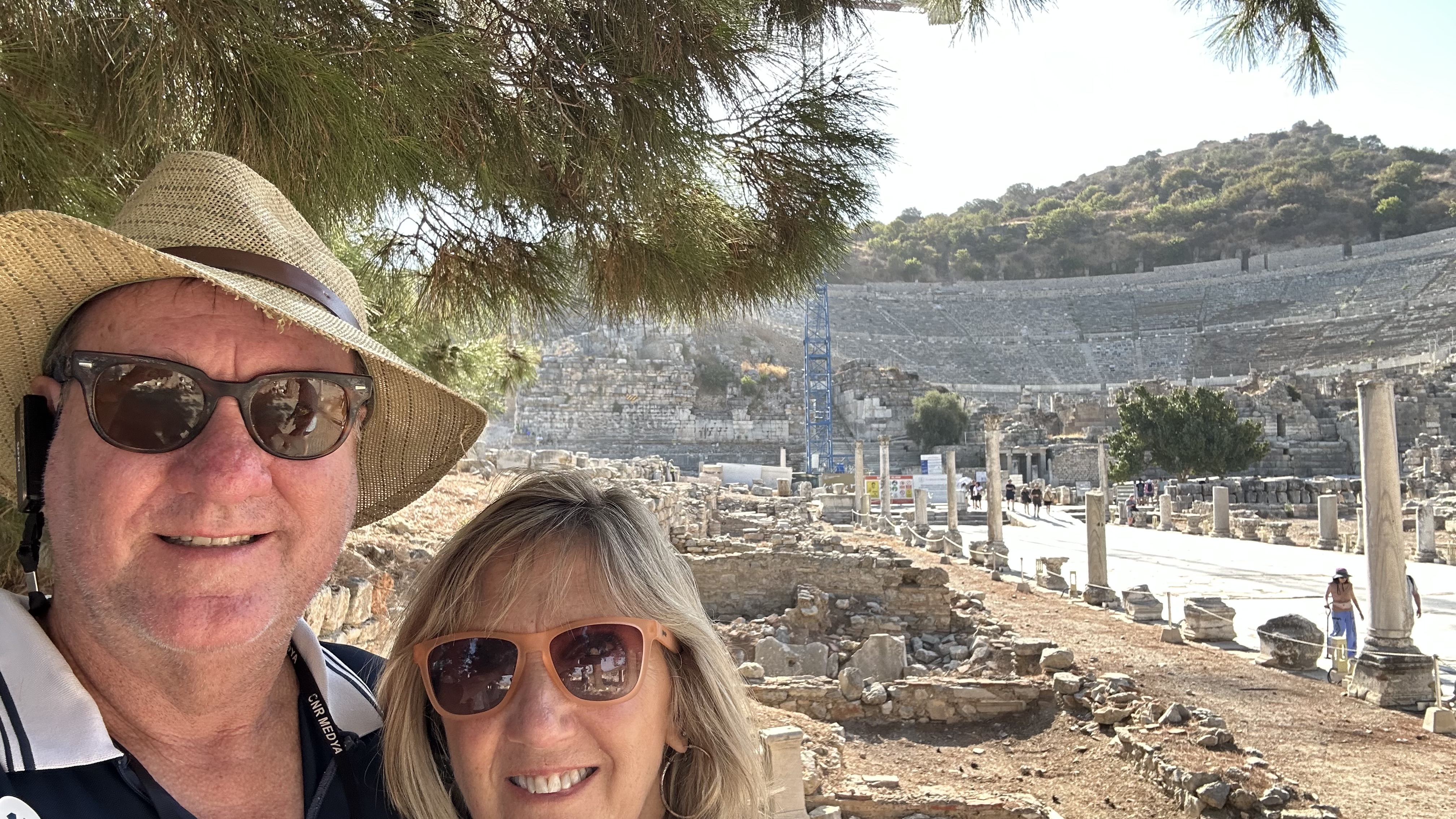
Week 602 · Ephesus, Turkey
Ephesus,
Our first trip to Ephesus was September 15, 2001 — we had arrived in Istanbul shortly before the attack on 9/11. By the time we landed in Izmir the world had changed. This time was different in every way.
Our first trip to Ephesus was September 15, 2001. We had arrived in Istanbul shortly before the attack on 9/11 and connected to a flight to Izmir, and by the time we landed the world had changed. Everyone in Turkey was very supportive, but at the end of the day I don't have a lot of recollection of the Ephesus visit from that trip — outside of trying to act normal when nothing felt normal at all.
Ephesus was one of the largest cities in the ancient world — at its peak under Roman rule it had a population of around 250,000 people, making it the second-largest city in the empire after Rome. It was the site of the Temple of Artemis, one of the Seven Wonders of the Ancient World. The Library of Celsus, built around 117 AD, once held 12,000 scrolls and was the third-largest library in the ancient world. St Paul lived here for three years and the Gospel of John is believed to have been written here.
Ephesus was much more impressive than my limited memory from 2001. We had a great guide and spent about two hours there before returning to the port city of Kusadasi. Short visit of about five hours total — but it was enough time to walk the whole site properly. The scale of it is what gets you. This wasn't a town. It was a city.


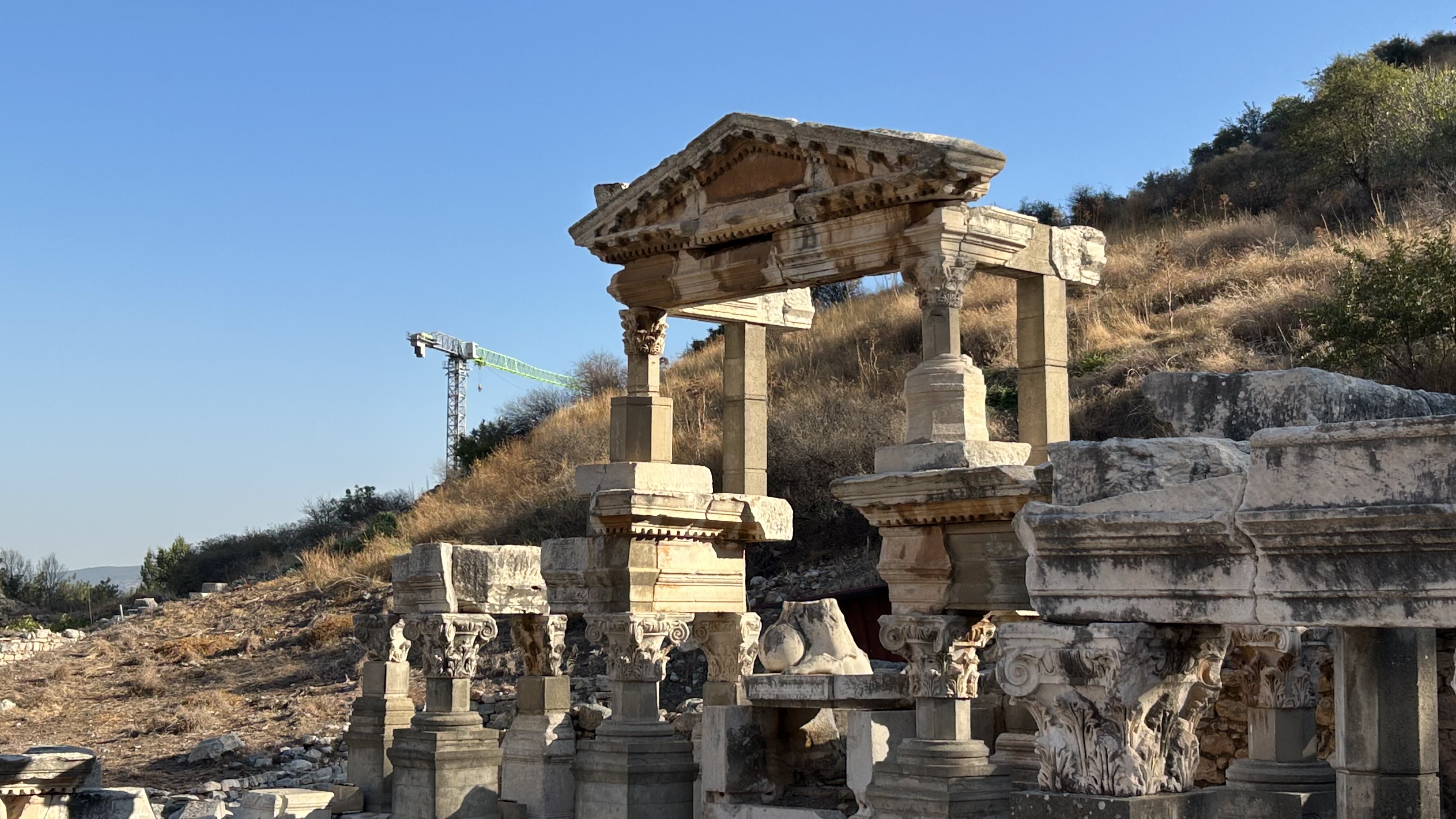


"The scale of Ephesus is what gets you. This wasn't a village or even a town. At its peak this was a city of 250,000 people — the second largest in the Roman Empire."
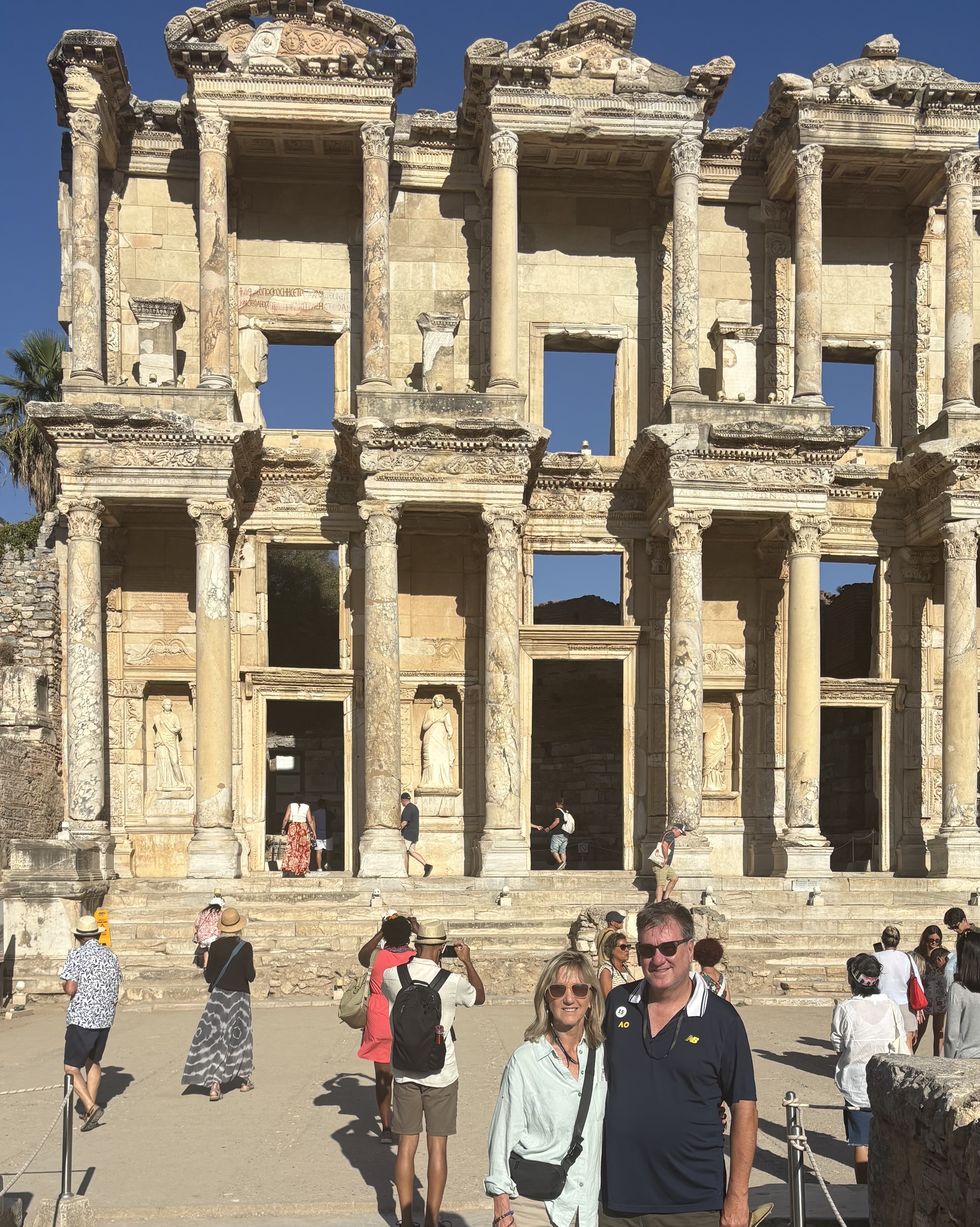
The Library of Celsus facade is the most recognisable image of Ephesus — two storeys of columns, niches and statues representing Wisdom, Knowledge, Intelligence and Valour. The building was constructed as a tomb for the Roman Senator Gaius Julius Celsus Polemaeanus, whose sarcophagus still lies beneath the floor.

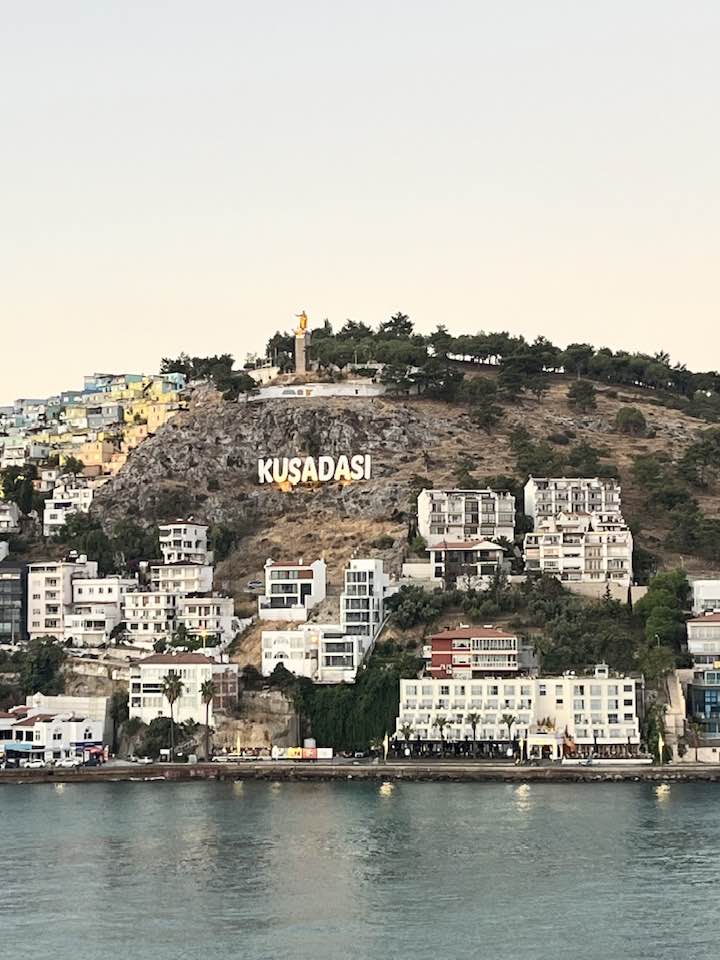
The port town of Kusadasi was bigger than I would have expected. We spent very little time there — most of the time was in the carpet shop. The hustling at the carpet store is a well-established Kusadasi tradition and we participated fully. You get tea, a presentation, a lot of very beautiful rugs rolled out across the floor, and a price that starts high and moves. Good fun if you go in knowing what it is.
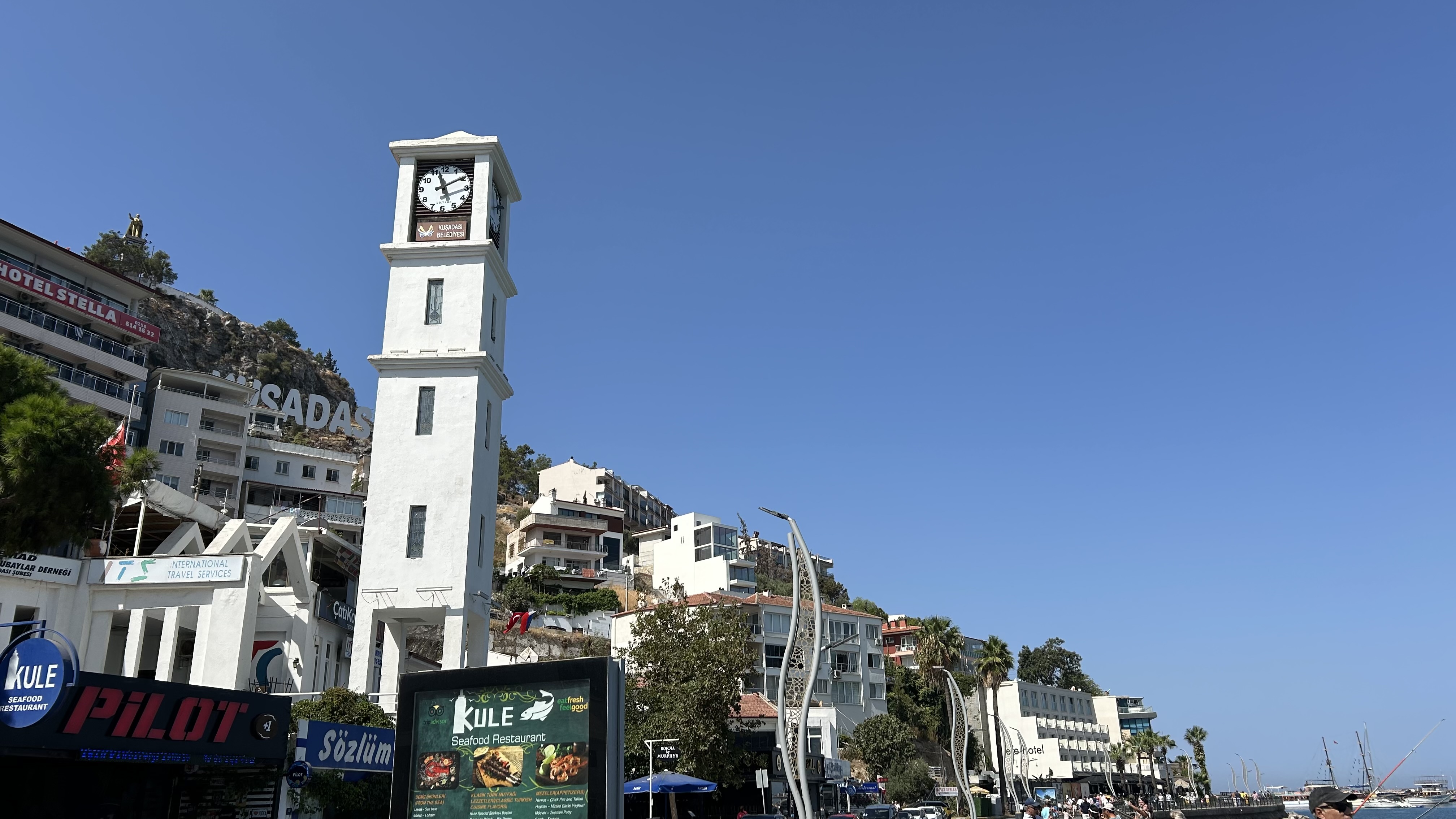
Short visit of about five hours total — Ephesus itself, the port, and the carpet shop. Ephesus was the highlight by a distance and is worth far more time than a cruise ship shore excursion allows. If I come back to Turkey, I'd spend a full day here and stay in Kusadasi overnight to have the site early in the morning before the tour groups arrive.